

Join NTUC Membership
FairPrice Group
Care Support
NTUC Gift
UTAP Funding
NTUC Club
Singtel Benefits
Trust Bank Info Trust Card


No Worker Left Behind

Story 1 Thumbnail

More Than Just a Workplace

How the union became a lifeline for the Hotel Miramar family.

Read more

Story 2 Thumbnail

Responsible Retrenchment

Why treating workers fairly matters to employers.

Read more

More Than Just a Workplace:

How the Union Became a Lifeline for the Hotel Miramar Family

Source: Food, Drinks and Allied Workers Union (FDAWU) Webpage
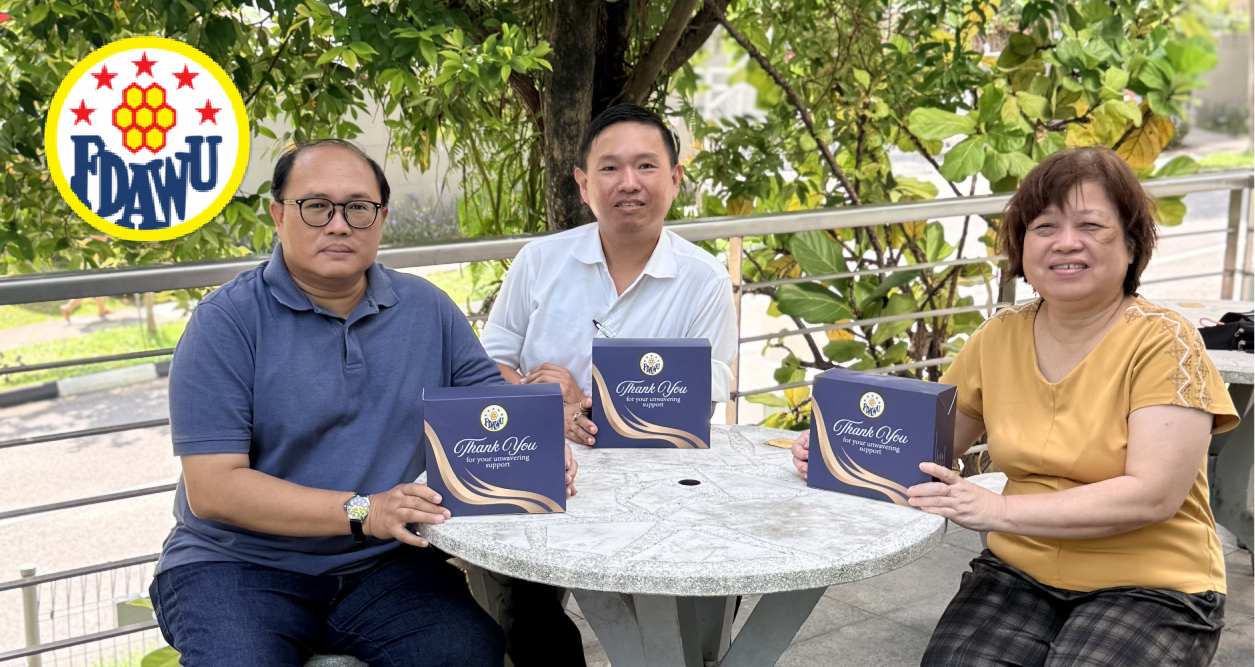
Staff from Hotel Miramar

When a hotel closes its doors, it isn't just a business shutting down – it is the end of a chapter for the people who walked those halls every day. For the staff at Hotel Miramar, the recent transition has been a period of immense change. Yet, in the face of uncertainty, they found themselves not navigating the storm alone.

From veteran staff to new hires, the consensus is clear: the Food, Drinks and Allied Workers Union (FDAWU) was more than a mediator; it was a partner in their journey.

Union representatives sharing reskilling data profiles.
“The Union stepped in to share resources, ensuring we had pathways to find new opportunities.”

A Safety Net in Uncertain Times

For many, the news of My Retrenchment brought an immediate sense of displacement. Brendan Eng Yuyi, who transitioned to a role as a personal driver, recalls the crushing weight of the moment. "It was a huge sense of loss," Brendan reflects. "But when I was worried about my future, the Union stepped in to share resources, ensuring we had pathways to find new opportunities."

That sentiment of being "found" rather than "lost" is echoed by George, now with SATS Food. "It was touching," he says. "The Union made a genuine effort to help us find work. We didn't feel abandoned."

This proactive support wasn't a last-minute reaction to the closure, but a culmination of years of relationship-building. Aaron, who is currently exploring new career opportunities, remembers the daily presence of the Union long before the retrenchment. "They were always there – from vouchers and annual gifts to ensuring our salary adjustments were fair. They treated everyone, local or foreign, with the same dignity and respect. It made all the difference."

Distribution of annual welfare framework elements.
“The Union was consistently present, distributing gifts and vouchers.”

Closure with Dignity

Even for those transitioning into retirement, the support provided a sense of peace. Branch Official Sister Cindy, now retired, speaks fondly of her tenure. "There hasn't been a negative experience," she says. "The Union was consistently present, distributing gifts and vouchers, and the retrenchment benefits gave many of us a sense of closure. It was handled with care."

The "Middleman" Perspective: Building Bridges

Perhaps one of the most unique insights comes from Ruth, a former Assistant HR Manager at the hotel. For Ruth, the Union was a professional partner that taught her the true value of industrial relations.

"When I was new to the role, the IRO (Industrial Relations Officer) was incredibly patient," Ruth explains. "Negotiations for our Collective Agreements weren't battles; they were ‘give and take.' We learned to see each other's perspectives."

Structured HR alignment sessions with an Industrial Relations Officer.
“When I was new to the role, the IRO (Industrial Relations Officer) was incredibly patient.”

Ruth notes that in HR, she often sits in the middle – the bridge between management and staff. She discovered that sometimes, when management speaks, the message isn't fully heard. When the Union spoke, however, it acted as a vital translator, clarifying expectations and offering reassurance in a "language" the workers understood.

"There were times when the Union's involvement wasn't just about policy, but about humanity," Ruth recounts. She shares a story of a long-term employee who was struggling with health issues. When the time came for a difficult conversation about contract renewal, the Union was there to mediate, provide evidence, and ensure the process was handled with both fairness and empathy. "It reinforced for me that the bond between worker and union is essential."

Investing in the Future

The Union's impact on Ruth extended beyond her HR duties; it helped shape her personal growth. By utilizing the Union Training Assistance Programme (UTAP), she upskilled with courses on Workplace Fairness Act and the PDPA at NTUC Learning Hub. After attending a recent e2i career festival, she saw the sheer scale of the Union's effort to keep workers relevant.

Welfare gift presentation layout setup.
For Kaval, the experience was rounded out by the thoughtful annual gifts from the Union.

"I've grown a genuine interest in industrial relations," Ruth says. "The experience taught me that when you have a strong Union, you don't just have better workplace rights – you have better, more confident people."

A Foundation of Friendship

Another meaningful story is from Ms. Kaval Singh, whose years at Hotel Miramar were defined by much more than just professional duties. Through her over 30 years of Union membership, she discovered a vibrant community, transforming her workplace into a space where she found many lifelong friends. This bond of solidarity was matched by the practical security the Union provided; by maintaining a steady climate of industrial peace, the FDAWU ensured that essential benefits like annual increment payouts were guaranteed and handled with transparency. For Kaval, the experience was rounded out by the thoughtful annual gifts from the Union — small but significant gestures that made her feel truly appreciated within the Miramar family.

A Legacy of Support

The story of the Hotel Miramar members is a testament to the fact that the Food, Drinks and Allied Workers' value is measured not just in clauses signed, but in the peace of mind offered to the worker on the ground. As these individuals step into new roles and new phases of life, they do so with the confidence that they were cared for, heard, and supported every step of the way.

Back to Top ↑

Responsible retrenchment:

Why treating workers fairly matters to employers

By Ian Tan Hanhonn | Source: NTUC website

A corporate professional processing transitional documents thoughtfully.

Job losses can strip people of their livelihood, identity and community. But when companies in Singapore manage retrenchment responsibly, they protect not just employees, but also their own reputation and resilience.

Retrenchment goes way beyond just letting workers go. For those affected, it spells not just a loss in livelihoods, but their sense of identity.

This is especially so for workers who have been part of a particular role and organisation for a long time. People often introduce themselves by what they do, and losing a job can feel like they are also losing part of who they are.

Furthermore, workplaces provide social connections and a sense of belonging, and retrenchments can disrupt that community, leaving workers feeling isolated.

While painful, retrenchment does not have to be destructive. When handled responsibly, it can safeguard the dignity of workers, maintain the company's reputation, and help the company avoid any potential legal penalties.

The case for responsible retrenchment

The way companies manage retrenchment sends a strong signal about their values. Employers who act with care, transparency and fairness demonstrate genuine commitment to their workforce, even in tough times.

In contrast, poorly managed retrenchments can result in reputational damage, lowered staff morale and even legal disputes. Here are some reasons why employers ought to manage retrenchment responsibly.

Ensuring legal compliance

In Singapore, the Ministry of Manpower (MOM) sets out clear guidelines for fair retrenchment practices.

Under the Tripartite Advisory on Mandatory Retrenchment Notifications, employers who fail to notify MOM within the required timeline may be fined up to $5,000.

Beyond complying with these guidelines, companies can also rely on their Collective Agreements (CA) with unions to ensure retrenchments are carried out fairly and responsibly.

A good example of this is Mediacorp's recent retrenchment on 1 September 2025. The company worked closely with the Singapore Union of Broadcasting Employees (SUBE) under its existing CA to ensure affected staff were treated fairly, and transition support was administered to help them secure new opportunities.

By working within the framework of the CA, Mediacorp was able to maintain industrial harmony, avoid protracted disputes, and preserve the trust of its remaining employees.

This helped Mediacorp safeguard its reputation as a responsible employer, negating any possible retrenchment disputes that may have resulted in the involvement of the Industrial Arbitration Court (IAC).

Protecting employees' dignity

Workers who face retrenchment are at a vulnerable moment in their lives. A responsible approach ensures they are treated with respect, given adequate notice, proper explanation and meaningful support to transition to new opportunities.

A good example of this would be Hotel Miramar Singapore. Before the company announced its decision to cease operations on 29 August 2025, the company had already engaged with its union, the Food, Drinks and Allied Workers Union (FDAWU).

The company has extended its retrenchment package to employees under the re-employment scheme and agreed to provide ex gratia payments to those with less than two years of service.

FDAWU, together with NTUC's e2i (Employment and Employability Institute), is currently working with Hotel Miramar to help all 108 employees secure new job opportunities and prepare for the next phase of their careers.

By upholding their workers' dignity, Hotel Miramar is helping workers leave with their heads held high and preserving the goodwill and legacy of the brand that has lasted for almost 60 years.

Preserving staff morale and company reputation

Retrenchment affects not only those who are let go but those who remain as well. Employees who witness their colleagues being treated callously are more likely to feel anxious, disengaged or even start seeking opportunities elsewhere.

Conversely, when workers see their peers being treated fairly, it reassures them that their employer does value its workforce, and that the decision to retrench was unlikely made on a whim.

And let us not forget that we are now living in an era where public perception shapes brand loyalty, so how a company handles retrenchment matters. News of sudden layoffs without explanation can quickly spread online and damage a company's corporate reputation.

Responsible retrenchment is not just about doing what is "nice". It demonstrates corporate responsibility, and it enhances trust among customers, investors and future talent.

Implementing responsible retrenchment

Responsible retrenchment requires deliberate planning and clear communication. Employers should:

  • Engage unions early: Work with unions to co-create solutions and provide workers with a voice.
  • Explore alternatives first: Consider redeployment, reskilling or shorter workweeks before resorting to retrenchment.
  • Be objective: Apply fair, objective criteria when selecting employees for retrenchment, while showing empathy throughout the process.
  • Support transitions: Facilitate career coaching, job matching and skills training to help workers move forward.
  • Inform MOM: Submit a retrenchment notification to the ministry within five working days of notifying affected employees.

You can refer to the Tripartite Alliance for Fair & Progressive Employment Practices (TAFEP) website for more details on how to conduct fair and responsible retrenchment.

Partnering with NTUC and its affiliated unions

No employer has to navigate retrenchment alone. NTUC and its affiliated unions are key partners in ensuring workers receive the necessary assistance. Unions can help mediate conversations, advise on fair practices and connect affected workers to career and training support through NTUC's ecosystem.

By collaborating with NTUC, employers can ensure retrenchment exercises follow fair, transparent and consistent practices; provide affected workers with access to financial assistance schemes and employability programmes; maintain industrial harmony by fostering trust between management and workers.

When Jetstar Asia announced its plans to cease its operations on 11 June 2025, NTUC, The Singapore Manual & Mercantile Workers' Union (SMMWU), Civil Aviation Authority of Singapore (CAAS), and Jetstar Asia came together to help over 500 of the affected workers.

The result was a three-day job matching exercise in June at Jetstar Asia's premises, which involved more than 450 job roles across 1,400 job vacancies.

In a recent update by NTUC Secretary-General Ng Chee Meng, he shared that 90 per cent of the affected pilots and cabin crew have since secured interviews or jobs with companies such as the Singapore Airlines (SIA) Group and Marina Bay Sands.

Employers are not alone

Retrenchment is never easy, but how it is carried out speaks volumes about an employer's values and leadership. Companies that approach it responsibly not only protect their workers' dignity, but they also safeguard their own reputation, maintain staff morale, and strengthen long-term business resilience.

Mediacorp, Hotel Miramar and Jetstar Asia show that when employers work together with NTUC and its affiliated unions, they can turn a difficult exercise into one that provides meaningful support, practical solutions and hope for affected workers.

At NTUC, every worker matters. Find out how our NTUC Membership can provide you with better wages, welfare and work prospects.

Back to Top ↑

Get Rewarded

$25 FairPrice E-Voucher

*Terms and conditions apply. Visit www.ntuc.org.sg/membership for more information.​


Sign-up Gift Eligibility (Where Applicable):

  1. Sign-up Gift promotion valid from 15 October 2026 to 31 December 2026.​
  2. New member(s) shall be eligible for the Sign-up Gift (as stated on this NTUC's website) if he/she has:-​
    1. applied for and activated recurring payments of the NTUC Membership fees either: (i) through credit/debit card arrangements; or (ii) e-Giro payment methods;​
    2. made upfront payment of the first three (3) months of NTUC Membership fees (the "Initial Paid Months") using the abovementioned payment methods, which fees are non-refundable; and​
    3. not terminated his/her NTUC Membership during the Initial Paid Months.​


  3. NTUC65 Membership Campaign Lucky Draws & Grand Draw:
  4. ​

    NTUC Membership Eligibility:
    NTUC Membership is open to persons above 16 years of age with valid NRIC/FIN number, except personnel from Singapore Police Force, Singapore Prison Service, Singapore Civil Defence Force, Singapore Armed Forces, Narcotics Service or Auxiliary Police bodies (Certis Cisco, Aetos and SATS), and foreign domestic workers. Please note that the NTUC Membership fee is $117 per annum ($9 per month from Jan-Nov & $18 in Dec).​


    ​ By signing up for the Membership, you are deemed to have consented to the above Terms and Conditions and NTUC's personal data protection policies.​

    ​

    FairPrice Group:
    ^Terms and conditions apply. Visit https://go.link.sg/fairprice_member for more information.​

    ​

    NTUC GIFT:
    #Policy Terms & Conditions apply. Insurance plans are underwritten and issued by Income Insurance. Protected up to specified limits by SDIC. This advertisement has not been reviewed by the Monetary Authority of Singapore Information is correct as at 10 May 2024.​

    ​

    UTAP:
    ‡Funding amount may vary and is for illustration purposes only. Terms & conditions apply.​

    ​

    Trust Bank:
    †Terms and conditions apply. Visit go.ntuc.org.sg/trustbank for more information.​ ​

    1. Illustration is based on rates which include promotional rates. Rates are subject to fulfilment of conditions such as minimum monthly spend. Promotional bonus rates are valid till 31 January 2027. Please see Trust Bank's General Terms and Conditions for more information.
    2. Up to 21% of savings in Linkpoints is a promotional rate. This is subject to change. Please refer to our Key Facts Sheet for Trust Link Credit Card and NTUC Link Credit Card and Key Facts Sheet for Savings Account by Trust at Trust website for the latest information.​
      • To earn monthly and quarterly bonus rates, a minimum monthly spend in a calendar month outside the FairPrice Group is required. Meet the relevant minimum monthly spend for a month to earn the monthly bonus rate, and for a quarter to earn a quarterly bonus rate. There are currently two quarterly bonus rates you can earn, each with their own minimum monthly spend. See Trust Bank's Key Facts Sheet for Trust Link Credit Card and NTUC Link Credit Card and Key Facts Sheet for Savings Account by Trust for details. A minimum monthly spend is the minimum Eligible Spend in a calendar month to earn monthly and quarterly bonus rates.​
    3. FairPrice Group groceries refer to FairPrice, FairPrice Finest, FairPrice Xtra, FairPrice Xpress (excluding Esso outlets), FairPrice online, Unity, Cheers (excluding Esso outlets). The FairPrice member savings is applicable for all purchases at FairPrice Group groceries (excluding Cheers). T&Cs apply.​

    4. Trust Bank's General Terms & Conditions apply, visit trustbank.sg for more information.​


v